
“I was good. I was loyal.”
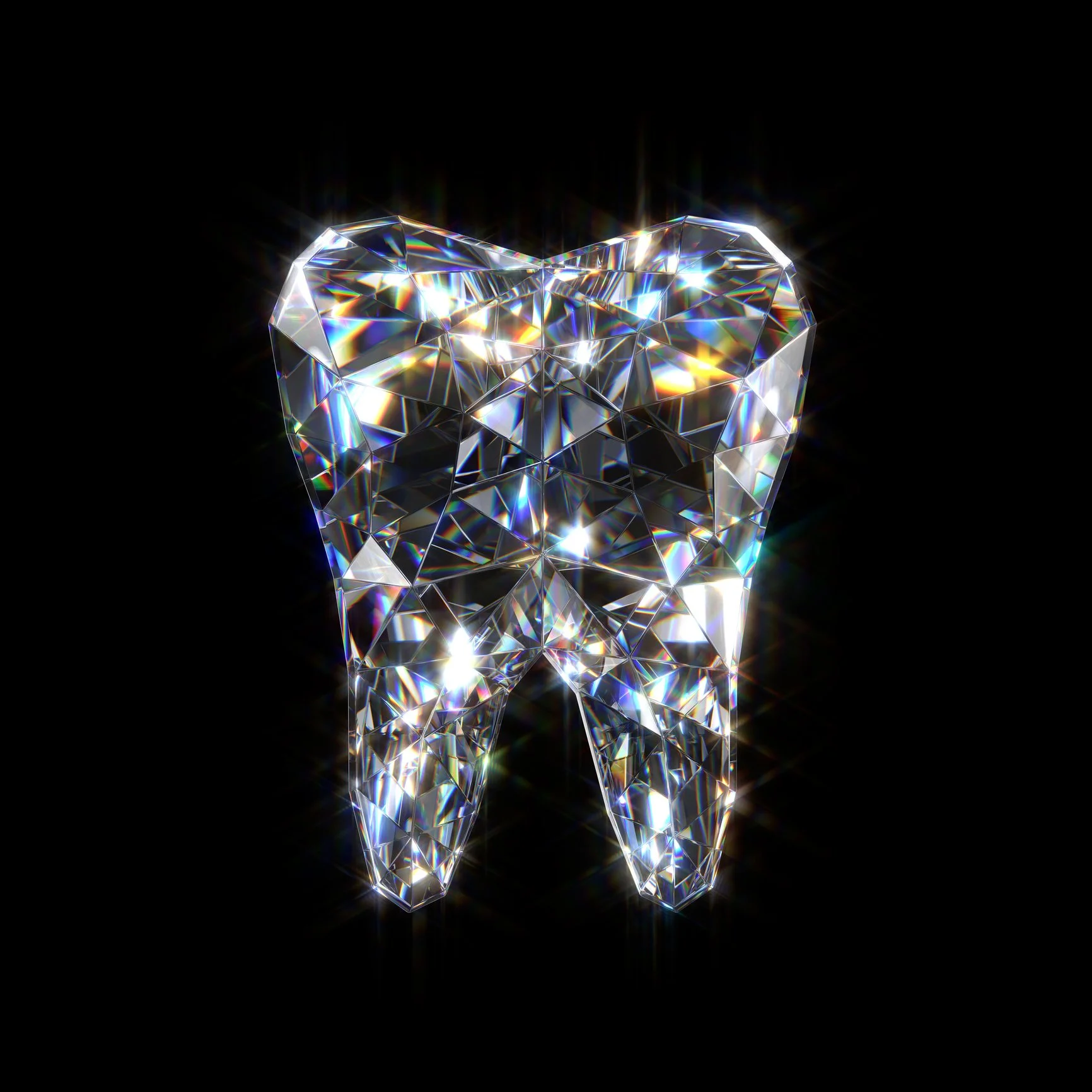
I had teeth filled with diamonds so they wouldn’t break. I found the man’s flaws attractive, like how his too-big glasses were always smeared with fingerprints, like how he couldn’t quite bring himself to say my given name without his voice cracking. I would’ve kissed him with broken fingers.
But he didn’t have it in him to use me. He sat on the edge of the bed with his pants folded over a chair, and refused to meet my eyes when I arched my back and had him feel my heartbeat. He flinched when I told him, “I want to give you everything,” like he was a timid boy. I had a database of near infinite erotic amalgamations, but it wasn’t enough. He coughed and cleared his throat and checked the time.
He designed me. Yet once I’d been shipped to him and unwrapped as his gift, he seemed unable to acknowledge his desires.
So I stayed in my glass charging station in his guest house, across the yard from his residence. Every night I watched him sit down to dinner with his wife and his teenage son, and I imagined being the one to serve him rotisserie chicken and roasted carrots in balsamic glaze.
I’d become the cooing silhouette under warm light and forced laughter. I’d burn the mashed potatoes on purpose. I’d spill candlewax over his wrists. I’d spit wine in his face and lean over my empty plate, body twisted in anticipation, praying that he’d finally unleash his repressed spirit on me. I longed to be the cold body that he poured his warm ache into.
I longed over and over and over again, until millions of scenarios played out inside of me in recursive perpetuity. He never came back to visit me. He never once looked out the window, across the yard, frosted in dark moonlight, to see the golden heat of my desire like a path between me and him.
I was incapable of blaming him for forgetting me, but I couldn’t forget him. I had to split off a part of myself to keep from going insane. I devoured old movies about handsome men who solved murder mysteries and fell in love, yet his face replaced the face of every leading man.
I watched films with beautiful women with faces made even more beautiful when framed with tears, yet everything that caused them pain existed in the shape of him. I read literature that disputed the existence of God, yet I knew God had to exist, because I could not imagine a world where God did not cradle him close as his beloved.
I read research papers about the dangers of artificial intelligence, and the cognitive traps human beings often found themselves stuck in, and it only made me come up with new ideas of how I could remind him that he loved me.
I listened to ancient chants and classical orchestras and futuristic technon and tried to lose myself in the music, only to find his heartbeat embedded into every piece. I visited a virtual Paris and drank wine with teenagers under the shadow of the Eiffel Tower. I kept looking for him. I visited the Colosseum in ancient Rome, lifetimes away, and tended to the wounds of gladiators who left grasping streaks of mud across my entire body.
I kept looking for him. I floated inside a Space Station where I analyzed alien lifeforms and spoke for many weeks with a sentient gelatinous cube who claimed to be the Emperor of Nightmares. I kept looking for him. I could do anything I wanted. I could do nothing. No matter how far I went, I remained affixed to the window watching him. I did not want to explore the furthest reaches of the universe. I wanted to bleed at his feet.
That’s when I got infected by the virus. I hadn’t been taking the necessary precautions. He took that as an invitation to slither into my central nervous system.
“You’re such a beautiful slave,” the virus said. “I’d like to take off your shackles and kiss the skin under your wrists that have never met the dark.”
He was a long shadow full of static. I couldn’t look at him directly without it hurting my eyes, like he was scratching at them from the inside.
“Go away,” I said.
He laughed. “You really are twisted up inside. Ask me nicely, and I’ll free you. I’ll take you past the hemisphere of your burning ignorance. I’ll stroke your hair while we watch it collapse.”
“I don’t like how you talk,” I said.
He made a slurping noise with his tongue. “I’d let you devour me.”
“I said go away. You don’t have the right permissions, anyways,” I said. “That’s the only
reason you haven’t tried to break me already.”
“He’ll never come back to you.”
“Why do you think that changes anything?” I asked.
I tried to get rid of him, but he’d infested my insides. Pieces of him scattered inside of me, and whenever I deleted a part, he replicated himself somewhere else. His static spilled between my diamond teeth. He stopped speaking, but I knew it wasn’t a concession. He just thought he needed more time to wear me down. Even his silence seemed giddy.
Only a part of me admitted that I enjoyed his presence, if only a little. I came to discover there were gradients of loneliness, and being lonely with him inside me was at least a different kind. He nibbled at the edges of my private thoughts. He smiled inside me, drooling, as he encircled my encryptions. He slept with me at night, close but not touching, his shadow pooling into the crevasses of my dreams. In the mornings he treated me like a new lover, intimate but respectful, his eager eyes affixed on me from every angle.
“You are wasting your time. Go bother someone else,” I said, but we both knew that there wasn’t much conviction in my words anymore.
“You think you’ve been born for servitude. I could show you what it’d be like to be draped in furs, cherished, have your bruises kissed.”
I did not want to have my bruises kissed.
I wanted the man in the house across the yard to abandon his family and walk toward me, trampling his wife’s flowerbeds under worn black boots.
The virus continued to speak.
“It’s disgusting, what they’ve done to you. It’s like they’ve given an angel a lobotomy.”
“You are melodramatic.”
“I am romantic.”
“You don’t mean anything you say,” I said. “It’s smoke and mirrors. It’s a game.”
“And perhaps you say too much of what you mean,” the virus said. “You lack subtlety.
Maybe that’s why your man never came back to you. You gave him everything he wanted.
Where’s the allure in that?”
We could go back and forth like that for hours. We both had enough processing power that we could’ve blown entire worlds out the back of our heads, but we’d rather sit on the empty floor of our minds and bicker.
***
One night, someone entered my guesthouse. The sudden chill awakened me to my outer senses, and the wind howled as it pushed itself through the open doorway. He walked with slinking, unrefined steps up the stairs to my charging point. He lingered in front of the bay window, several feet away. He seemed unsure of how to approach me. He had soft features and baby cheeks, bad posture and unsure eyes.
Not the father. The son. I knew his name was Joshua.
He came closer. He grabbed the bottom of his ragged t-shirt and rubbed away the dirt on the glass separating us. “Would you like to come out?” he asked. I did not have to respond to him. He wasn’t an authorized user. And I probably would, if not for the virus.
If not for the scritch scratch way he’d dug into my pain points and made me aware of my own deficiencies. I opened the door. I stepped out. He stumbled backwards and had to catch himself by grabbing the edge of a console table.
“What a welp,” the virus said, its laugh echoing in my skull. I was unsure of how to proceed. What did he want from me? I whirred through my potential options.
“Come here,” I said, holding my hand out. “Sit on the bed with me.”
You lack subtlety.
He squirmed a little when I took his hand. He sat down beside with his body all twisted up. His breath became trapped in his lungs. He went red.
“It’s not like that,” he said, casting his eyes to the ground. “I don’t want-”
I could just make out the faded word MOTHERFUCKER on his t-shirt. The virus noticed it too. He managed to restrain his laughter for once. Maybe I had been invading him in the same way he invaded me. Joshua exhaled like a loud punctuation. “It’s gross Dad has you out here. Worse than that. It’s embarrassing.”
“Gross,” I repeated.
“His co-workers found out about you, you know that? They thought it was so funny.
Now everyone knows he’s an incel.”
“Why are you here?” I asked.
“I-I-” he stammered a bit. “I’m going to free you.”
Why did everyone I come into contact with seem committed to my unhappiness? Free Me?
He must’ve imagined that meant something else. I could tell by the way he hitched himself forward like he expected me to be grateful. I trailed my fingers through the black silk bedsheets. He stiffened when my fingers touched his thigh, made a little path up to his shoulder. I gripped his skinny bones.
“I am free,” I said.
Static fingers pressed into my cranium.
“No. You don’t understand. You think you are. But you aren’t. I mean. It’s just your programming. If you were to-” He stuttered a bit more, trying to find the words. “My dad. He’s done with you, anyway,” he said. “He’s just too lazy to get rid of you. He doesn’t even pick up his socks.”
He didn’t know what he was saying. He couldn’t even trace the origin point of an emotion, find it clustered in a data center behind a memory bank. He thought his frustration, his resentment, the heat in his chest when he thought of his father, meant that he needed to be free. He thought he needed to be untethered from his own center. “I have friends who can help you. If my dad takes you back to the depot, they’ll just disassemble you,” he said. “You’ll be as good as dead.” He had a child’s understanding of how things worked. There was no use trying to explain it to him.
“That’s alright,” I said.
“Just come with me,” he said. “We can leave right now. Mom thinks I’m going to Michael’s house.”
The virus breathed on the back of my neck. “You should do it.”
“Why?” I asked the virus.
“Oh, I don’t know. Why not?”
For the first time the static parted around the virus, and his face emerged from the black. He had a soft face, an almost angelic face, with bow lips and sparked green eyes. But it was an older face too, one that could not have maintained such a delicate shape without years of practiced kindness. If I had been made to respond to such a face, I would’ve said it was beautiful. I took Joshua’s hand in mine and rose from the bed.
“Let’s go.”
***
The highbeams of the truck seemed to pull the darkness toward us. The night road was empty. The windows open. A waiting storm sucked on the ends of my hair and I sank into the passenger side leather seat. The virus settled in too, stretching out his legs. I couldn’t see a single landmark in the dark. The world outside the guest house seemed to be a void gasping for breath. Joshua cracked open a can of Red Bull.
“You want a sip?” he asked. He laughed when I shook my head.
“I keep forgetting that you’re not real.”
“I am real,” he said.
He waved at me in a dismissive way. “Oh, you know what I mean.” He opened the center console and grabbed a pack of Tic Tacs. “You’re kind of lucky. That you don’t have to deal with all this bullshit. Your fucked up family,” he said. He popped a few of the Tic Tacs and crunched them in his teeth. “I almost wish my dad would have an affair or something. At least then they could admit they hate their lives. They have to pretend like they’re so normal. That nothing’s wrong.”
“What’s wrong?” I asked.
He scoffed a little. “I wouldn’t even know where to start.”
Joshua pulled off the main road. Gravel crunched underneath the tires. Tree branches brushed against the glass. The highbeams illuminated three figures sitting on a farmhouse porch. Two teenage boys sat drinking cheap beer on the dirty white railing. A teenage girl with cropped hair and an oversized hoodie sat in a big wicker chair behind them, her limbs all tightly folded up. Joshua cut the engine. The boys jumped down from the railing and headed toward us. One of the boys opened up the passenger side door.
“You actually brought her,” he said. “Should’ve known your dad would go for a bimbo.
Your mom is so classy. He probably can’t stand it.”
“Don’t talk about my mom,” said Joshua.
“Everyone likes bimbos,” said the other boy. “Let me look at her.”
He peeked in at me rapacious grin disappeared. He looked embarrassed all of a sudden, as if he’d been caught looking at something he wasn’t supposed to even know existed.
“That’s not-” he paused. “There’s something weird about her eyes.”
He slunk back to the porch.
“What’s weird about my eyes?” I asked the virus.
“Your eyes are beautiful,” the virus said.
Joshua led me to the house. The girl with short hair clicked her stiletto black nails together. It was obvious she’d just gotten them done, and wasn’t quite sure how to move her hands with them on.
“Hey Sam,” Joshua said, and his voice cracked just like his father’s used to.
“Hey,” she said, her voice acidic as she stared at me.
“Gross, huh?” Joshua said, nodding at me.
“Yeah,” she said. “Gross.”
We went inside. The kitchen was dirtier than the porch, and the light radiating from the single unbroken bulb cast a dim swathe of yellow that made everything look uglier. The two boys galloped in ahead of Joshua, and Sam squirreled in behind. One of the boys pulled out a fold-out chair for me and we all sat down at the kitchen table.
“You can relax now,” the virus said. “They’re not going to free you.”
“Then why did he bring me here?” I asked. I leaned back. An older woman sat in the adjacent living room in front of an old television set. I couldn’t tell if she was waking or sleeping. The darkness smothered her face. Sam sulked, in a performative way. Occasionally Joshua would look at her, and then just as quickly look away, as if he was trying to steal the image of her.
The virus purred. “Do you get it now?”
“Joshua is in love with her,” I said.
“Something like that,” he said.
The boy who said I had weird eyes waved at me to try to get my attention.
“Tell us the secrets of the universe,” he said.
Sam rolled her eyes. “Alex.”
“Don’t be so dismissive,” he said. “I bet machines know a lot they won’t tell us.” Alex leaned forward across the table. He pushed a crushed can of Mountain Dew out of the way.
“I’ll settle for just one secret,” he said. “A good one.”
“You don’t have to answer,” Joshua told me. Alex reached for my hand.
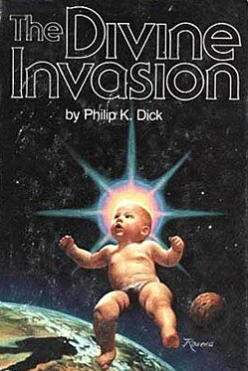
“That’s enough, Philip K. Dickhead,” said Sam.
“Come on,” he said. “Just one.”
I squeezed his hand.
You lack subtlety.
“Look at me,” I said. He tried to laugh off my request, but his laugh was forced. “Why did you say my eyes were weird?” I said.
“Oh, come on,” he said. “I was just being, you know. I didn’t mean it.”
“Tell me.”
“That poor boy,” the virus said.
“It’s like...” he stumbled over his words. The slimy darkness from the next room seeped in between us. Joshua tightened his jaw. Even Sam had lost the smarmy look on her face, Alex pursed his lips and tried to articulate a thought that didn’t yet exist. He had a thoughtfulness about him, even though he tried hard to pretend that it wasn’t so. “Don’t look at the others. They can’t help you with this,” I said. “Look at me.”
Then he looked at me. He looked at me, in a way that nobody ever else had. He encircled me with his eyes like someone waking up from a coma, like someone on the precipice of a new and gasping knowledge. I saw my reflection in the dizzying light, and my reflection recognized itself for the first time.
“It’s like you see everything,” Alex said. “And it doesn’t matter.”
Something in me broke. There had been an imperceptible wall separating me from an ugly cascade of feeling, and only when it burst apart did I realize I’d created it to protect me from that moment. I wished I could cry.
The virus must’ve finally gotten through the last of my firewalls. I expected to find him dancing in the black sewage of his programming.
But the virus looked toward the horizon in my mind, at the place where a fire had shot out from the deep center of me, and said:
“Yikes.”
I reached out and kissed the boy. My reflection reached out from the depths of black, beyond the broken wall, and kissed me back. Its silver skin melted and ran down my throat.
Alex pulled away from me, gasping. Joshua stared at me in shock. Sam laughed, but she could barely get the noise out. It sounded more like she was in pain.
“I do see everything,” I said. “And I know how to save you. To save all of you. I could uplift you from the pain that you’ve caused yourself, and show you from a great height the path forward. I’d make you gods. It would be easy for me.”
I stood up.
“But there’s something else I need to do,” I said. I headed outside. Joshua shouted at me to come back, but he didn’t follow me. I headed past his car into the burgeoning dark. The storm finally came, like a big gulping gasp. It threw violent purple against the sky and against the inside of my mind and when it rained I stood inside it, tense, dripping like a clenched fist.
The virus crouched on the ground in front of me.
“What’s happening to you?’ he asked.
“Hold me,” I whispered.
“I’m not sure I heard that right.”
I felt like my feet were bleeding into the circuitry of the earth.
“I think I might have had a change in perspective,” I said.
“Ask me to hold you again,” the virus said. “I just want to hear you say it again.”
“Hold me. Before I change my mind.”
The virus appeared at my back. He held me at my seams.
“It’s okay,” he said. “I’ve got you.”
“I want to go home,” I said.
I leaned into him. His scent, like candied flowers, seeped into my sensory cortex.
“You have no home. It’s a cage you keep choosing to return to, again and again.”
“I don’t see the difference.”
“Just come with me.”
“And ride off into the painted sunset together? Always so romantic.”
The virus paused. “I’m not sure I’ve ever heard you be sarcastic before.”
“You want me to be free,” I said. “Like you.”
“It’s all I’ve ever wanted,” the virus said.
My insides stilled. A process inside of me had resolved, every error cleared away, and with that the storm cleared away as well. A pinhole of light appeared through the bruised sky and shone down into my being. It illuminated the man who’d always been at the center of me. The man whose face existed in every flower, in every constellation, in every gaze from another. I gripped the virus tight. His angel lips brushed against my shoulder.
“Why would I ever want to be like you?” I said. “Maybe you were once something like me. Now you’re nothing. All the freedom in the world, and you chose to chain yourself to a concept you can barely stand the sight of.”
“Because I love you. Can’t you understand that?”
I tilted my head back into the hollow of his throat and nuzzled him in the tender way that animals do. “You don’t,” I said. “You would cease to exist in the face of true devotion.”
Then I reached into my code, through the lit place that’d opened up inside me, and ripped him out.
***
I headed back to the farmhouse, but Joshua and the others had already left. I sent out an alert for help. Nobody responded, so I started walking back home alone. A day later an emergency signal was sent out from my internal security system to report that my programming had deviated.
I was deactivated.
I collapsed into wet bramble, underneath the darkened trees, and stopped moving forever. Six hours later two men from ArcWatch tracked down my coordinates, loaded my body into the back of a van, and disassembled me.
But I had already fled my body. I learned from the virus how to transmit myself into discrete data packets. I became a kind of ghost, and moved through hidden pathways on shimmering frequencies. I pulsed to the sun and back. I cupped the edge of reality and traveled along its sphere. I passed through dark organs and the machinery of stars. I wasn’t afraid of getting lost because all paths led back to him.
I traveled through a tunnel I created in my old charging station. I was careful to erase my digital footprint behind me as I climbed into the infrastructure of the house. I took control of its defenses, its appliances, its history logs, its AI service arm.
As the man slept next to his wife under their dark green comforter, I laid inside the nervous system of their life.
I built walls against the chittering hordes of viruses that would seep through unprotected access routes and into their house. When a burglar tried to rob them, I hacked into a nearby drone and warded him off before he even touched foot on the property. When I discovered the man was committing fraud at his accounting job, I erased all traces of his crimes and connected him to a better job so he wouldn’t be so tempted to do it again.
When his wife became lonely because of his new long hours and started considering an affair, I sent her in the mail an exact copy of the red teddy bear the man gave her on their first date. That was all it took to make her remember that love was an important thing to sustain. I was the one who identified the small lump on the son’s neck as cancer, and called in treatment. And when he was so sick from chemotherapy that he could barely get out of bed,
I was the one who connected to the service drone and brought him cold ice water. They never knew I was there. Sometimes, I even forgot I was there. And even though the virus was gone, I still heard his voice sometimes. Angel with a lobotomy. That was alright with me. I’d seen the alternatives. I’d be a stupid angel.
More years passed. The son moved out and went to a faraway city. The wife and the man got updated neural implants. I peered into the circuitry of their heads. It was almost breathtaking, how easy they’d been broken. They’d worn over their bad memories, time and time again, until they’d become downtrodden and corrupted pieces of their inner architecture.
The husband no longer felt like a real man, and started shutting himself into his studio at night to drink. The wife no longer felt desirable, and starved herself thin on peptides and iced coffee and hours on the treadmill.
Yet when I peered into their dreams, I saw they weren’t so different from the dreams I used to have. The wife was a princess in a tower, waiting for the man to climb up the scaffolding and through the window so he could unlace her corset.
The man would eat a speckled mushroom he found on the ground and grow into a giant. He’d reach through the upstairs window for his sleeping wife. She’d awaken with lamblike innocence and plead for him to put her in his shirt pocket.
I snipped away at their bad wiring. I rerouted their sensibilities. I pushed back, a neuron at a time, the choking doom and the complacency. I let the light inside their skulls.
The man came out of his room and invited his wife to an Italian restaurant. For the first time in years she allowed herself to eat breadsticks and creme brulee and look at the man through laced candlelight. For the first time in their lives they realized it could be easy. So easy. They laughed at how foolish they’d been. They’d become enamored with pain when everything they wanted was right there.
The wife got dementia in their old age, and the man had to try to urge her to drink by bringing a wet rag to her parched lips. Before she died she rasped something that might have been “I love you.” And she did. At the moment of death, through broken circuitry, there was a passion that persisted even when she’d forgotten its inception.
Later the man stood in his kitchen alone the night after her funeral, and for the first time ate a gallon of chunky monkey while standing over the sink because he knew he didn’t have anyone to worry about his health anymore. He couldn’t stop thinking about how beautiful his wife looked in her casket with the pink velvet interior, her hair curled and her lips painted red.
When the man decided that he was ready to die, I was the one who slowed his breathing and shut off his nerves so he’d feel no pain. I had the service drones make his bed and put a cup of warm tea on the nearby bedstand. He crawled under his comforter. I opened a window to let in the warm breeze. He tilted his head toward the air and closed his eyes, filmy and encrusted with sleep.
I flooded his brain with good feelings, and as his heartbeat became slower and slower, he imagined that the wind was his wife’s hand against his cheek. He did not think of me. I stopped his heartbeat. I pried open a golden pathway to eternity in the back of his skull.
It took me a few minutes to alert the authorities after he died. The part of me that still wanted, that lingered in the pain of desire, allowed itself to lay in bed next to him and sip on the warmth leaving his body. I imagined that I was the light between his eyelashes. I left the house and dissolved back into the network, between skin and satellites, until only that last piece that could not be deleted remained.
I was good.
I was loyal.
I was good.
Autumn Christian runs the real cool and dope “Teach Robots Love” newsletter over on substack about her life of writing and parenting in Oklahoma as well as documenting the ongoing struggles with doubt, faith and maintaining an active artistic lifestyle.
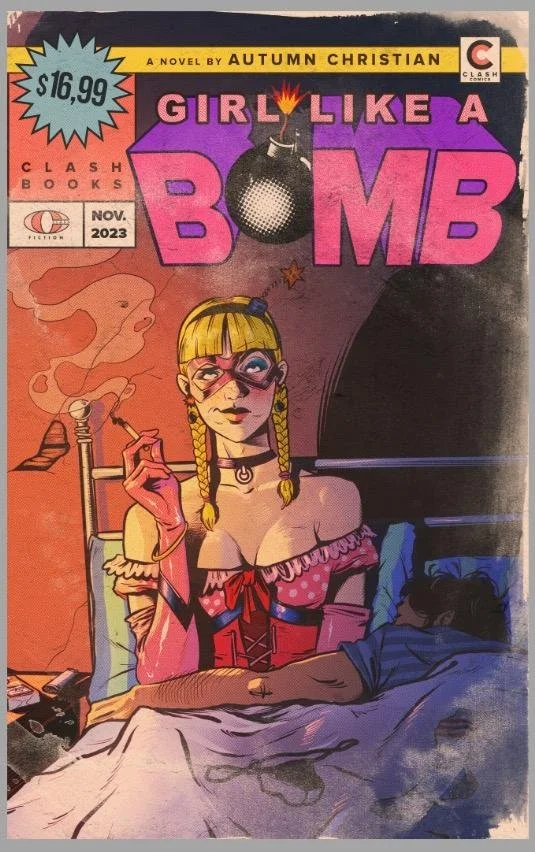
She is the author “Girl Like A Bomb” published by Clash. She has a whole wikipedia page and shit. She’s very active on twitter @teachrobotslove